The 17 Most Misunderstood Facts About different types of sharpening stones

Some Known Details About Different Types Of Sharpening Stones

The other apparent benefit is the usage of water instead of oil to eliminate the swarf from the stone. However, the water stone is not ideal. The softness that promotes fast cutting also wears the stone down quicker. This tends to use the stone unevenly, which needs flattening to bring the stone back into shape.

These little commercial diamonds are much harder than any of the other honing stones. However, not all diamond stones perform the same function, nor are they constantly created equal. There are two primary kinds of diamond stone designs. The more common style includes holes in the diamond surface area to capture the swarf.
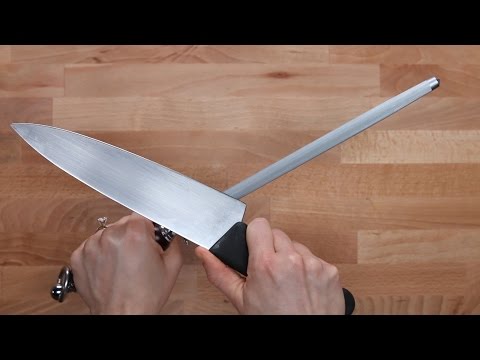
The next type is the continuous diamond surface area. These stones are chosen when you are honing tools with points that may get caught in the recesses of the non-continuous diamond surface. Both kinds of diamond stones are offered in mono-crystalline and poly-crystalline diamonds. The mono-crystalline diamonds are more preferable as they will last longer.

In fact, extra-coarse diamond stones are frequently utilized to flatten oil or water stones. The main downside of the diamond stone is its preliminary expense. While these stones are the most expensive, they will likewise last a very long time, so the long-term expense can be similar to other stones. There are excellent reasons there are different kinds of sharpening stones offered.

Not known Factual Statements About Oil Stones, Water Stones, And Diamond Stones

Selecting the right one starts by finding the stone with the very best mix of benefits for your specific sharpening needs. View Diamond Stones View a Video on Picking a Sharpening Stone Monday through Friday, 8 a.m. – 4:30 p.m. Phone US: 1-800-351-8234Outside United States: +1 -608 -203 -1129.

Topics Covered: Oil Stones Arkansas Stones Diamond Stones Water Stones Summary Which type of sharpening stone you pick is mainly a matter of individual choice similar to what type of automobile you prefer. Some individuals like Arkansas stones and would use absolutely nothing else, others prefer diamonds stones for their speed and ease of upkeep and others would only hone with water stones. what type of sharpening stone do i have.

Sharpening Stones are also called whetstones. The word "whetstone" is stemmed from the word "whet" which means to hone. This is contrary to the common belief that the name originates from their need to be soaked prior to utilize. There are 4 primary types of sharpening stones. 1. Oil Stones The oil stone has been utilized for many years to sharpen knives and tools.

The name oil stone refers to the truth that you require oil to lubricate the stone before honing with it. There are two common products utilized make oil stones: Aluminum Oxide – This is among the most popular options when it concerns manufactured sharpening stone materials and an extremely reliable abrasive for honing.

Oil Stones, Water Stones, And Diamond Stones – Questions

You'll find these stones labeled as coarse, medium or fine. Aluminum Oxide is a really hard abrasive rated at 9 on the Mohs Solidity Scale making it an excellent honing abrasive. Silicon Carbide – This is the fastest cutting oil stone. Silicon Carbide stones usually come in a coarser grit so they can't produce an edge as sharp as the one from Aluminum Oxide or Novaculite.

Due to the fact that they can hone quickly, you'll find many people starting their honing with them, then continuing to an India stone prior to finishing up with an Arkansas. Oil stones are low-cost costing in between $7 and $30 and have a common grit range of 100-600. 2. Arkansas Stones Arkansas Stones deserve their own category because they can be used with oil or water.

The word Novaculite originates from a Latin word significance "razor stone". Arkansas stones have been quarried considering that the early 1800s from bedrock deposits discovered in the Ouachita Mountains of Arkansas. They are cut into rectangular shaped whetstones https://daddystayshome.com to be utilized for sharpening knives and tools. The Arkansas stone is the most misunderstood of all honing abrasives.

The info provided listed below is from our own experience and screening. The specific gravity rankings are from our own tests carried out in May 2019. We checked 4 stones of each type. The values offered below are approximately those 4 samples. Arkansas stones can be found in four grades; Soft, Hard, Black and Translucent.

The 4-Minute Rule for 3 Different Types Of Sharpening Stones

It is normally marbled in color with colors varying from white, gray, black, orange or pink. The grit is equivalent to 400-600. The particular gravity of the Soft Arkansas stone is 2.22. Tough Arkansas – The Hard Arkansas stone is the great grit stone. It is usually white to off-white in color but can have some light orange or reddish colors blended throughout the stone.

The particular gravity of the Hard Arkansas is 2.32. Black Arkansas – The Black Arkansas stone is one of the finest of the four. It is an extra-fine stone and is black or blue-black in color. The Black Arkansas Stone has a grit equivalent to 2000 grit. The specific gravity of the Black Arkansas is 2.55.

The color might be an uniform shade of very light gray, white or they will often have light shades of pink running through them. The grit is comparable to 3500-4000. The particular gravity of the Translucent Arkansas is 2.56. Arkansas Sharpening Stones 3. Water Stones Water stones can be either natural or manufactured (synthetic) stones.

Natural Waterstones have actually been quarried in Belgium and Japan for centuries and hold a special place in honing stone history and lore. Belgian whetstone production began as a result of the Roman Conquests and the stones have been exported from Belgium considering that the 17th century. There are 2 types of Belgian honing stones; the Coticule and the Belgian Blue Stone (BBW).

How What Are The Different Types Of Sharpening Stones can Save You Time, Stress, and Money.

Belgian Sharpening Stones Natural Japanese sharpening stones are becoming scarce after centuries of quarrying however they are still readily available today. Many of these stones are mined near Kyoto, Japan and are highly demanded by straight razor users and knife lovers. Japanese whetstones vary in grits from 500 to 10,000 and cost from $25 for a Nagura stone to $500+ for larger stones.
5 Cliches About types of sharpening stones You Should Avoid

Getting The Arkansas Sharpening Stone To Work

The best method of sharpening a knife is with a whetstone. There are other approaches and Discovering the best method to utilize a whetstone might take a little bit of practice, once you get the hang of it, you'll have the ability to keep knives razor sharp while conserving money and time.

Dull knives force you to use more pressure to accomplish the cut you want, and pressing down harder can trigger the knife to slip. So not just do you cut yourself, however you cut yourself worse due to the fact that you were using more force to the knife. See Now: How to Sharpen a Knife With a Whetstone To begin, get a two-sided whetstone, with a coarse grit on one side and fine grit on the other.

In basic, it's someplace around 22 degrees. To envision this, picture 90 degrees, which is directly up and down. Then think of half of that, which is 45 degrees. And after that another half of that is 22 1/2 degrees. Do not fret about the half degree. However do speak with the technical info that included your knife, or inspect with the producer to confirm the appropriate angle you should be using.

The 5-Minute Rule for Knife Sharpening Stone

Do not let the name confuse you. Using oil or water on a whetstone traps tiny metal particles in the liquid, which in turn produce a more ragged edge than when using a dry stone. The difference between a waterstone and a whetstone is that a waterstone is a natural stone, frequently Japanese owing to geological functions unique to that part of the world.

A whetstone is a different sort of stone, sometimes natural, sometimes artificial. Some whetstones are OK to wet, others not. For example, soaking a synthetic whetstone can significantly reduce its life-span. Again, speak with the instructions provided by your stone's producer prior to doing anything you're not certain about. Illustration: Kelly Miller.

Tips Always hone in the exact same direction, whether it's front-to-back or back-to-front. Do not think the buzz about knives that allegedly "never require honing." Cutting produces friction, and friction causes a knife's edge to lose its sharpness. There's no avoiding the laws of physics. Don't try to sharpen Look after your knife so it keeps its edge longer.

Some Known Details About Diamond Sharpening Stones

Get Your Great Afternoon Product Here: To find out more on these knives, contact David Holly at david@knifemerchant.com or check out knifemerchant.com Let us understand how you enjoy your Minonokuni. Knife Merchant 7887 Dunbrook Road Suite HSan Diego, CA 92126800-714-8226www. knifemerchant.com .

The actual procedure of honing your hunting knife's edge of your knife's blade is a fairly easy process which may appear like it requires little explanation. However there's a lot that really enters into honing your knife appropriately. For example, different types of blade steels and various types of blade grinds need different grits and various developing angles.

Bushcraft or field knives will more than most likely be honed by a pocket sharpener as you will have them out in the field. It's also important to have the proper whetstone for the job. Discovering the right whetstone can be made complex, yet it's an important part of the knife honing procedure requiring a more in-depth explanation.

Combination Whetstone for Dummies

Contents Whetstone Basics: Blade Grind 101: Blade Steel Grinding Tips: Types of Whetstones: Finish up: Contents 5 Finish up: Prior to we take a look at the actual procedure of sharpening a knife blade's edge, let's very first analyze the nature of whetstones. For instance, whetstones are divided into different groups consisting of naturally happening stones such as Japanese Water Stones and Arkansas Oil Stones and male made stones such as Crystalon (aluminum oxide) and India Stones (silicon carbide).

In addition, there are extra types of guy made whetstones such as diamond sharpens and ceramic hones that can be utilized either with or without water to oil them. Plus, both natural and male made whetstones are readily available in various grits with the more coarse grits being more abrasive and the finer grits being less abrasive.

So, let's begin with a description of blade grinds but, in order to do that, we first require to define some terms. In the case of a Saber Grind or a Hollow grind, the line found on the side of the blade above the cutting edge that extends from the back of the blade to the suggestion.

Unknown Facts About India Combination Oilstone

Likewise, the largest random sample of any knife blade is called the Spinal column. For that reason, a Saber Grind is a blade grind who's Main Bevel Line lies short on the face of the blade, close to the Cutting Edge, with either flat or a little concave Primary Bevels so that it creates a relatively thick Main Bevel.

With a Flat Grind, there is no Primary Bevel Line since the face of the blade is ground flat from the Innovative to the Spine which produces an edge that is sharper than a Saber Grind and tougher than a Hollow Grind. Consequently, knives implied for heavy-duty use normally have Saber Grinds whereas, knives implied for basic function use generally have Flat Grind and, knives implied for searching usually have Hollow Grinds.

This is necessary so that they can endure the shock produced when the knife is used to slice and, by the very same token, blades with Hollow Grinds will require to be sharpened at much lower edge bevel angles (10 to 15 degrees). Blades with Flat Grinds will need to be sharpened at angles in between the 2 depending of the thickness of the blade's Spinal column.

Facts About Water Stones Revealed

For example, knives with reasonably soft blades such as 1095 or SK-5 ranging from 50-55 RHC are typically utilized for big, heavy, blades with Saber Grinds and therefore, although they sharpen reasonably rapidly, they likewise tend to sustain the greatest quantity of damage to their edges and therefore, they frequently require the highest degree of repair most often.

Introduce Yourself (Example Post)

This is an example post, originally published as part of Blogging University. Enroll in one of our ten programs, and start your blog right.

You’re going to publish a post today. Don’t worry about how your blog looks. Don’t worry if you haven’t given it a name yet, or you’re feeling overwhelmed. Just click the “New Post” button, and tell us why you’re here.

Why do this?

  • Because it gives new readers context. What are you about? Why should they read your blog?
  • Because it will help you focus you own ideas about your blog and what you’d like to do with it.

The post can be short or long, a personal intro to your life or a bloggy mission statement, a manifesto for the future or a simple outline of your the types of things you hope to publish.

To help you get started, here are a few questions:

  • Why are you blogging publicly, rather than keeping a personal journal?
  • What topics do you think you’ll write about?
  • Who would you love to connect with via your blog?
  • If you blog successfully throughout the next year, what would you hope to have accomplished?

You’re not locked into any of this; one of the wonderful things about blogs is how they constantly evolve as we learn, grow, and interact with one another — but it’s good to know where and why you started, and articulating your goals may just give you a few other post ideas.

Can’t think how to get started? Just write the first thing that pops into your head. Anne Lamott, author of a book on writing we love, says that you need to give yourself permission to write a “crappy first draft”. Anne makes a great point — just start writing, and worry about editing it later.

When you’re ready to publish, give your post three to five tags that describe your blog’s focus — writing, photography, fiction, parenting, food, cars, movies, sports, whatever. These tags will help others who care about your topics find you in the Reader. Make sure one of the tags is “zerotohero,” so other new bloggers can find you, too.

Design a site like this with WordPress.com
Get started